
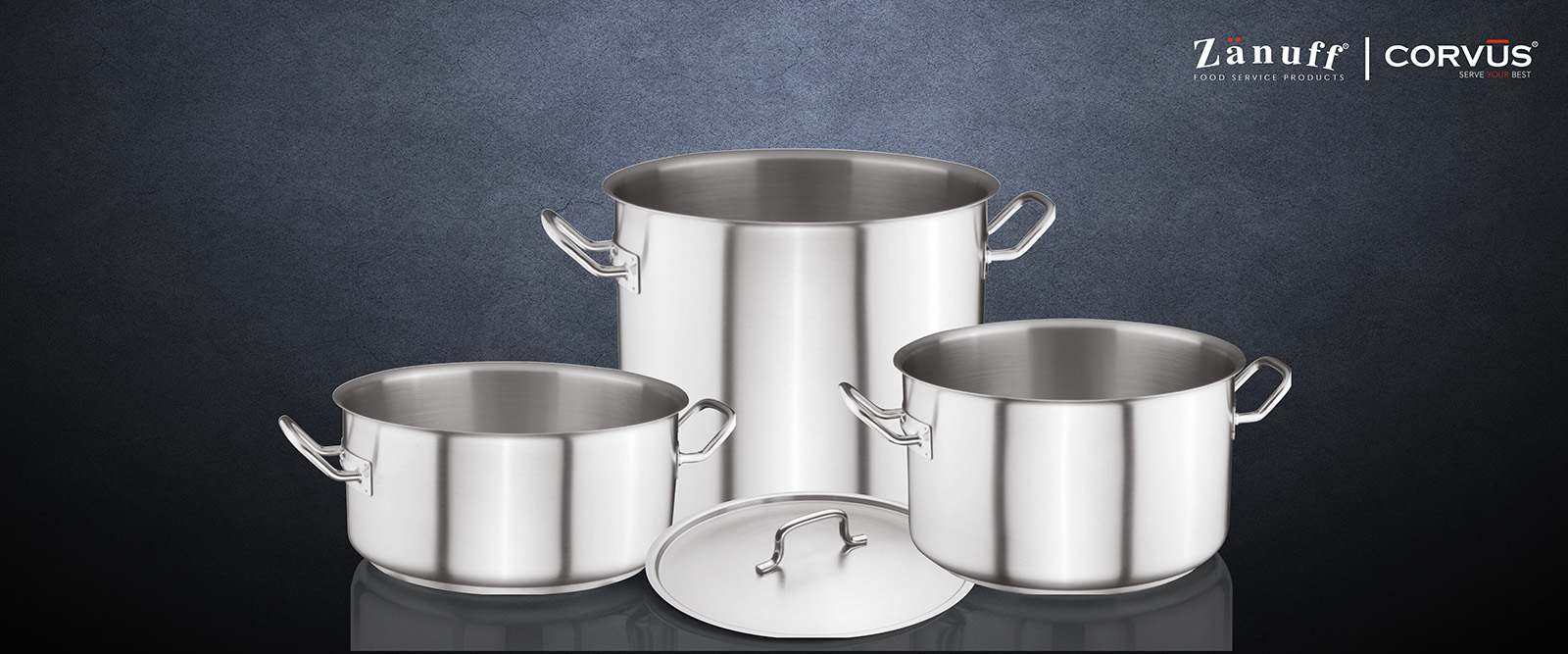
The Right Cooking Pot Can Make or Break a Commercial Kitchen
Picture a busy lunch service at a restaurant. One chef is preparing dal makhani in a large patila, another is cooking biryani in a handi, while someone else is boiling milk and preparing gravy for the next batch of orders. During these peak hours, every minute counts.
Now imagine if the cookware is not suited for the job. A pot that heats unevenly can burn gravies. A vessel that is too small may require multiple batches, slowing down service. Using the wrong material for acidic ingredients like tomatoes or tamarind can even affect the flavour of the food. Over time, these small issues add up to higher fuel consumption, inconsistent food quality, and unnecessary replacement costs.
That’s why choosing the right cooking pot isn’t simply about buying cookware—it’s about improving the overall efficiency of your commercial kitchen.
Whether you run a restaurant, hotel, catering business, cloud kitchen, or institutional kitchen, selecting the right cooking vessel helps you prepare food more consistently, improve productivity, and deliver better meals to your customers.
Don’t Miss: Combi Oven Accessories Every Commercial Kitchen Needs Before Day One
Why Choosing the Right Cooking Pot Matters for Indian Cooking
Indian cuisine is incredibly diverse, and so are its cooking techniques. A commercial kitchen doesn’t rely on a single cooking vessel because every recipe demands different cooking conditions.
For example, preparing a quick tadka requires cookware that responds rapidly to heat. On the other hand, dishes like dal makhani, rajma, and nihari benefit from cookware that retains heat for long periods, allowing flavours to develop gradually. Dum biryani needs even heat distribution to prevent the bottom layer from burning, while boiling rice or vegetables in large quantities calls for spacious, high-capacity vessels like a patila.
Using the wrong cooking pot can create several challenges in a busy kitchen:
Choosing cookware based on the recipe and production volume helps commercial kitchens avoid these issues while improving day-to-day operations.
The Right Cooking Pot Helps You:
Cook food evenly
Uniform heat distribution reduces hotspots, helping gravies, curries, rice, and dals cook consistently without burning.
Improve kitchen efficiency
When cookware heats quickly and evenly, chefs can prepare food faster, especially during busy service hours.
Reduce fuel consumption
Efficient cookware transfers heat more effectively, helping kitchens save on gas or electricity over time.
Minimize food wastage
Better heat control lowers the chances of burnt or overcooked food, reducing unnecessary waste.
Maintain consistent food quality
Customers expect the same taste every time they visit. Using the right cookware helps deliver consistent results across every batch.
The takeaway is simple: there is no one-size-fits-all cooking pot. The ideal vessel depends on what you’re cooking, how much you’re preparing, and the type of heat source you are using.
So, which material should you choose? Let’s look at the most common options used in commercial Indian kitchens.
304 Stainless Steel Cooking Pots: The Workhorse of Commercial Indian Kitchens
If you walk into most professional kitchens, you’ll find one material used more than any other—304 stainless steel.
From restaurants and hotels to hospitals, hostels, and cloud kitchens, 304 stainless steel has become the preferred choice because it combines durability, food safety, and versatility. It performs well across a wide range of Indian cooking applications, making it a reliable option for kitchens that prepare hundreds of meals every day.
One of its biggest advantages is that it is non-reactive. Unlike ordinary aluminium cookware, 304 stainless steel doesn’t react with acidic ingredients such as tomatoes, tamarind, vinegar, or citrus. This means gravies, curries, soups, and sauces retain their intended flavour without any metallic aftertaste.
Why Many Commercial Kitchens Prefer Triply Stainless Steel
Modern commercial cookware often uses triply construction, where an aluminium core is sandwiched between two layers of stainless steel.
Why does this matter?
Stainless steel is strong and durable, while aluminium is an excellent conductor of heat. By combining both materials, triply cookware offers the best of both worlds—it heats quickly while distributing heat evenly across the cooking surface.
This helps solve one of the biggest challenges in commercial kitchens: hotspots.
Instead of certain areas becoming excessively hot and burning food, triply cookware spreads heat more uniformly, making it easier to prepare dishes like curries, dals, rice, and soups with consistent results.
Benefits of 304 Stainless Steel Cookware
Excellent durability
Designed for daily commercial use, stainless steel can withstand frequent cooking, washing, and heavy handling.
Even heat distribution
Triply construction reduces hotspots, helping food cook more evenly.
Rust and corrosion resistance
The material resists rust even in demanding kitchen environments where cookware is washed repeatedly.
Easy to clean and maintain
It’s smooth surface makes cleaning simpler, helping kitchens maintain hygiene standards.
Works with multiple heat sources
Most commercial-grade triply cookware is compatible with gas, induction, and electric cooktops, making it suitable for modern commercial kitchens.
What About Sandwich Bottom Cookware?
Some commercial cooking pots feature a Sandwich bottom (Steel-Aluminium-Steel) instead of full triply construction.
Sandwich bottom strengthens the base of the cookware while improving heat transfer where it’s needed most. This makes it a practical option for heavy-duty cooking applications, such as preparing large batches of curry, rice, or dal in commercial kitchens.
Is 304 Stainless Steel Right for Your Kitchen?
If your kitchen prepares a wide variety of dishes every day—from curries and soups to rice, gravies, and boiled vegetables—304 stainless steel is one of the most dependable choices.
Its durability, non-reactive surface, and compatibility with different heat sources make it a long-term investment for restaurants, hotels, caterers, institutional kitchens, and cloud kitchens looking for reliable cookware that performs consistently under heavy use.
Hard Anodized Cooking Pots: A Lightweight Option for Fast-Paced Kitchens
Not every commercial kitchen has the same cooking requirements. While 304 stainless steel is an excellent all-round choice, some kitchens need cookware that heats up quickly and is easier to handle during long shifts.
This is where hard anodized cookware stands out.
Hard anodized cookware starts as aluminium, but it undergoes a special electrochemical process that hardens the surface. This treatment makes it more durable, scratch-resistant, and corrosion-resistant than regular aluminium cookware, while still retaining aluminium’s excellent heat conductivity.
For chefs working in busy kitchens, this means faster heating, quicker response to temperature changes, and less time waiting for cookware to reach the desired cooking temperature.
When is Hard Anodized Cookware a Good Choice?
Hard anodized cookware is well suited for cooking techniques where quick heating and temperature control are important.
For example, it works well for:
Because it heats quickly, chefs spend less time waiting for cookware to warm up, helping improve kitchen productivity during busy service hours.
Benefits of Hard Anodized Cookware
Faster Heating
Hard anodized cookware reaches cooking temperature faster than stainless steel, helping reduce preparation time.
Lightweight Design
Compared to cast iron, it is significantly lighter, making it easier for chefs to lift, pour, and move around the kitchen throughout the day.
Better Heat Distribution
The material distributes heat efficiently, reducing hotspots and supporting more uniform cooking.
Improved Surface Durability
The hardened surface offers better resistance to scratches and corrosion than untreated aluminium.
Reduced Oil Usage
Many chefs find that hard anodized cookware requires less oil for everyday cooking, making it suitable for recipes where minimal oil is preferred.
Things to Keep in Mind
Although hard anodized cookware is durable, it’s not indestructible.
Commercial kitchens that frequently use metal ladles or sharp utensils should handle the cooking surface carefully to prevent unnecessary wear over time. Following the manufacturer’s care instructions can help extend the cookware’s lifespan.
For restaurants, cafés, cloud kitchens, and quick-service kitchens that prepare food continuously throughout the day, hard anodized cookware offers a practical balance between performance and ease of handling.
Cast Iron and Mitti Handi: Traditional Cookware That Still Has a Place in Modern Kitchens
Even with the rise of modern cookware, many commercial kitchens continue to rely on traditional cooking vessels for specific recipes.
Why?
Because some dishes simply taste better when cooked slowly using cookware that retains heat exceptionally well.
This is where cast iron and mitti handi continue to prove their value.
While these materials may not be the first choice for every cooking task, they remain indispensable for recipes that depend on slow, even cooking to develop rich flavours.
Cast Iron: Built for Slow Cooking and High Heat
Cast iron has been used in Indian kitchens for generations, and for good reason. Unlike lightweight cookware that loses heat quickly, cast iron absorbs heat gradually and holds it for a long time.
This stable cooking temperature makes it ideal for dishes that need to simmer for extended periods.
Think of recipes like: Dal makhana, Rajma, Nihari, Slow-cooked curries, Dum biryani, Large batches of dal
These dishes develop better flavour when cooked over gentle, consistent heat rather than rapid, uneven heating.
Why Chefs Continue to Use Cast Iron
Excellent Heat Retention
Once heated, cast iron maintains a steady cooking temperature, reducing sudden fluctuations during cooking.
Ideal for Slow Cooking
Its ability to retain heat makes it perfect for recipes that require long simmering times.
Naturally Non-Stick (After Seasoning)
With proper seasoning, cast iron develops a natural cooking surface that helps reduce sticking.
Highly Durable
A well-maintained cast iron vessel can serve a commercial kitchen for many years.
Compatible with Multiple Heat Sources
Cast iron works well on both gas and induction cooktops.
Seasoning: The Secret to Long-Lasting Cast Iron
Unlike stainless steel, cast iron requires regular seasoning. Seasoning involves applying a thin layer of cooking oil and heating the cookware until the oil forms a protective coating on the surface.
Regular seasoning helps:
While seasoning requires a little extra effort, many chefs consider it worthwhile because of the exceptional cooking results cast iron delivers.
Things to Consider Before Buying Cast Iron
The biggest drawback is its weight.
Large cast iron vessels can be difficult to lift when filled with food, making them less practical for kitchens where cookware is moved frequently throughout the day.
For this reason, many commercial kitchens use cast iron selectively for recipes that truly benefit from its heat-retention properties rather than for everyday cooking.
Mitti Handi: Bringing Authentic Flavour to Traditional Recipes
For many traditional Indian dishes, the cooking vessel contributes to the final flavour just as much as the ingredients.
That’s why mitti handi continues to be popular in restaurants specialising in regional cuisine, biryani, and slow-cooked delicacies.
Unlike metal cookware, mitti handi allows moisture to circulate gently inside the vessel, creating a slow-cooking environment that helps food remain tender while enhancing its natural flavours.
It is commonly used for: Dum biryani, Dal, Slow-cooked curries, Regional speciality dishes
Many restaurants also use mitti handi for serving food, adding a traditional touch that enhances the overall dining experience.
Benefits of Mitti Handi
Authentic Taste
Many chefs believe slow cooking in clay enhances the flavour and aroma of traditional dishes.
Better Moisture Retention
The gentle cooking process helps retain moisture, making dishes softer and more flavourful.
Excellent for Dum Cooking
Mitti handi naturally supports slow cooking methods where heat and steam need to remain trapped inside the vessel.
Traditional Presentation
Serving food in mitti handi creates an authentic dining experience, especially for regional cuisine.
Limitations of Mitti Handi
Although mitti handi offers excellent cooking characteristics, it also requires careful handling.
It is:
For these reasons, many commercial kitchens reserve mitti handi for speciality dishes rather than every day, high-volume cooking.
Non-Stick Cookware: Convenient, But Best Used for the Right Recipes
Non-stick cookware is popular because it makes cooking and cleaning easier, especially for foods that tend to stick to the surface.
Most non-stick cookware uses Polytetrafluoroethylene (PTFE) coatings that reduce sticking and require less cooking oil.
When used correctly, PTFE-coated cookware is considered safe for normal cooking temperatures. However, manufacturers generally recommend avoiding temperatures above 250°C, as excessive heat can damage the coating over time.
Best Uses for Non-Stick Cookware
Non-stick cookware is best suited for Pancakes, Sauteing vegetables, Foods prepared with minimal oil
While it offers convenience, it is generally not the preferred choice for high-temperature commercial cooking or heavy-duty kitchen operations.
How to Make Non-Stick Cookware Last Longer
Following a few simple practices can significantly increase its lifespan:
Many buyers also look for cookware manufactured without intentionally added PFAS, reflecting growing awareness about modern non-stick coatings. When purchasing, always review the manufacturer’s product specifications and safety guidelines.
Like every cookware material, non-stick cookware has its strengths. The key is to use it for the applications it is designed for rather than expecting it to replace every other cooking vessel in a commercial kitchen.
How to Choose the Right Pot Size for Your Commercial Kitchen
Choosing the right cookware material is only half the decision. The size of your cooking pot is just as important.
A pot that’s too small can slow down your kitchen by forcing chefs to cook multiple batches. On the other hand, an oversized pot may waste fuel, take longer to heat, and reduce cooking efficiency when preparing smaller quantities.
The right pot size depends on three factors:
For example, a café serving 50 customers a day doesn’t need the same cookware capacity as a hotel kitchen preparing meals for 500 guests.
Recommended Pot Sizes for Different Commercial Kitchens
5–10 Litres:
Best suited for small restaurants, cafés, bakeries, quick-service outlets
Ideal for preparing gravies, soups, sauces, tea, milk, and small batches of rice.
10–20 Litres
Suitable for: Cloud kitchens, Medium-sized restaurants, Fast-food outlets, Small catering businesses
This capacity works well for daily preparation of dal, curries, rice, soups, and vegetables.
20–30 Litres
Recommended for: Hotels, Hospitals, Schools, Industrial canteens, Institutional kitchens
These kitchens often prepare food in larger batches, making medium-to-large capacity cooking pots a practical choice.
30–50 Litres
Ideal for: Catering businesses, Banquet kitchens, Central production kitchens, Corporate cafeterias
These vessels help reduce the number of cooking cycles, improving productivity during high-volume food preparation.
50 itres and Above
Designed for: Community kitchens, Temples, Military kitchens, Large hospitality establishments, High-volume catering operations
These heavy-duty cooking pots are built to handle bulk meal production while maintaining consistent cooking performance.
Tip: Instead of choosing cookware based only on litre capacity, think about how much food you prepare during your busiest service hours. Buying cookware that matches your actual production volume can improve workflow, reduce fuel consumption, and help maintain consistent food quality.
Which Cooking Vessel Should You Choose?
Commercial kitchens rarely rely on just one type of cooking pot. Different vessels are designed for different cooking methods, helping chefs work more efficiently and achieve better results.
Here’s a quick guide to some of the most commonly used cooking vessels.
Patila
A patila is one of the most versatile vessels in a commercial kitchen.
It is commonly used for: Boiling rice, cooking vegetables, preparing stocks, Boiling pasta, Bulk cooking
Its deep design makes it ideal for preparing large quantities while reducing the chances of food spilling during cooking.
Tope
A tope is best suited for liquid-based preparations.
It is commonly used for: Boiling milk, Preparing soups, Making sauces, Heating beverages, Reheating liquid dishes
Its shape makes stirring easier while helping maintain even heating.
Handi
A handi is designed for slow cooking.
Its rounded shape helps distribute heat more evenly while retaining moisture, making it ideal for recipes that require gentle cooking over time.
A handi is commonly used for: Dum biryani, Pulao, Curries, Slow-cooked gravies, Traditional regional dishes
Many restaurants also use a handi for serving food because it enhances presentation while keeping dishes warm for longer.
The best commercial kitchens don’t depend on a single vessel—they use the right cookware for each cooking technique.
Is Your Cookware Induction Compatible?
As more commercial kitchens adopt induction cooking, choosing compatible cookware has become increasingly important.
Induction cooktops heat cookware using a magnetic field. This means not every cooking pot will work on an induction stove.
For cookware to be induction compatible, it must have a magnetic base.
Here’s a quick reference:
|
Cookware Material |
Induction Compatible? |
|
Triply Stainless Steel |
✔ Yes |
|
Magnetic Stainless Steel |
✔ Yes |
|
Cast Iron |
✔ Yes |
|
Aluminium |
✔ Only with an induction base |
|
Hard Anodized Aluminium |
✔ Only if fitted with an induction base |
|
Copper |
✔ Only with an induction base |
|
Mitti Handi |
✘ No |
A simple way to check induction compatibility is to place a magnet against the base of the cookware. If the magnet sticks firmly, the cookware is generally suitable for induction cooking.
What Should You Look for Before Buying Commercial Cookware?
Buying cookware isn’t just about choosing stainless steel or cast iron. Every purchase should support your kitchen’s daily operations and long-term efficiency.
Before making a decision, ask yourself these questions:
What is my daily production volume?
Choose cookware that matches the number of meals you prepare each day.
Which heat source do I use?
Make sure the cookware is compatible with gas, induction, or electric cooktops used in your kitchen.
Is the cookware built for commercial use?
Commercial kitchens require cookware that can withstand continuous heating, washing, and heavy handling.
Is it easy to clean?
Smooth, durable surfaces reduce cleaning time and help maintain hygiene standards.
Are the handles comfortable and secure?
Well-designed handles improve safety, especially when moving heavy cookware.
Does the lid fit properly?
A good-fitting lid helps retain heat and moisture while improving cooking efficiency.
Can the cookware be stacked easily?
Stackable cookware saves valuable storage space in busy commercial kitchens.
Does the supplier offer after-sales support?
Consider warranty coverage, spare parts availability, and long-term product support before making your purchase.
One simple rule can save money over time:
Don’t choose cookware based only on the purchase price. Choose cookware based on its overall value, durability, and expected lifespan.
Higher-quality cookware may cost more initially but often reduces replacement costs and improves kitchen efficiency over the long run.
Final Thoughts
Every commercial kitchen is different. A restaurant preparing dum biryani has different cookware needs from a cloud kitchen producing hundreds of meals a day, and a hospital kitchen requires different vessels than a catering business serving large events.
That’s why there isn’t a single cooking pot that’s perfect for every application.
Instead, the best approach is to choose cookware based on your menu, cooking technique, production volume, and heat source.
For most commercial kitchens, 304 stainless steel remains the preferred all-round choice because it’s durable, non-reactive, and suitable for a wide variety of recipes.
Hard anodized cookware is ideal when lightweight construction and faster heating are priorities. Cast iron continues to be the go-to option for slow-cooked dishes that benefit from exceptional heat retention, while mitti handi adds authentic flavour and presentation to traditional recipes.
When you combine the right cookware material with the right vessel—whether it’s a patila for bulk boiling, a tope for liquid preparations, or a handi for dum cooking—you create a kitchen that’s more efficient, more consistent, and better equipped to handle the demands of everyday service.
Investing in quality commercial cookware isn’t just about improving cooking performance. It’s about reducing fuel costs, minimising food wastage, maintaining consistent food quality, and helping your kitchen operate smoothly for years to come.
