
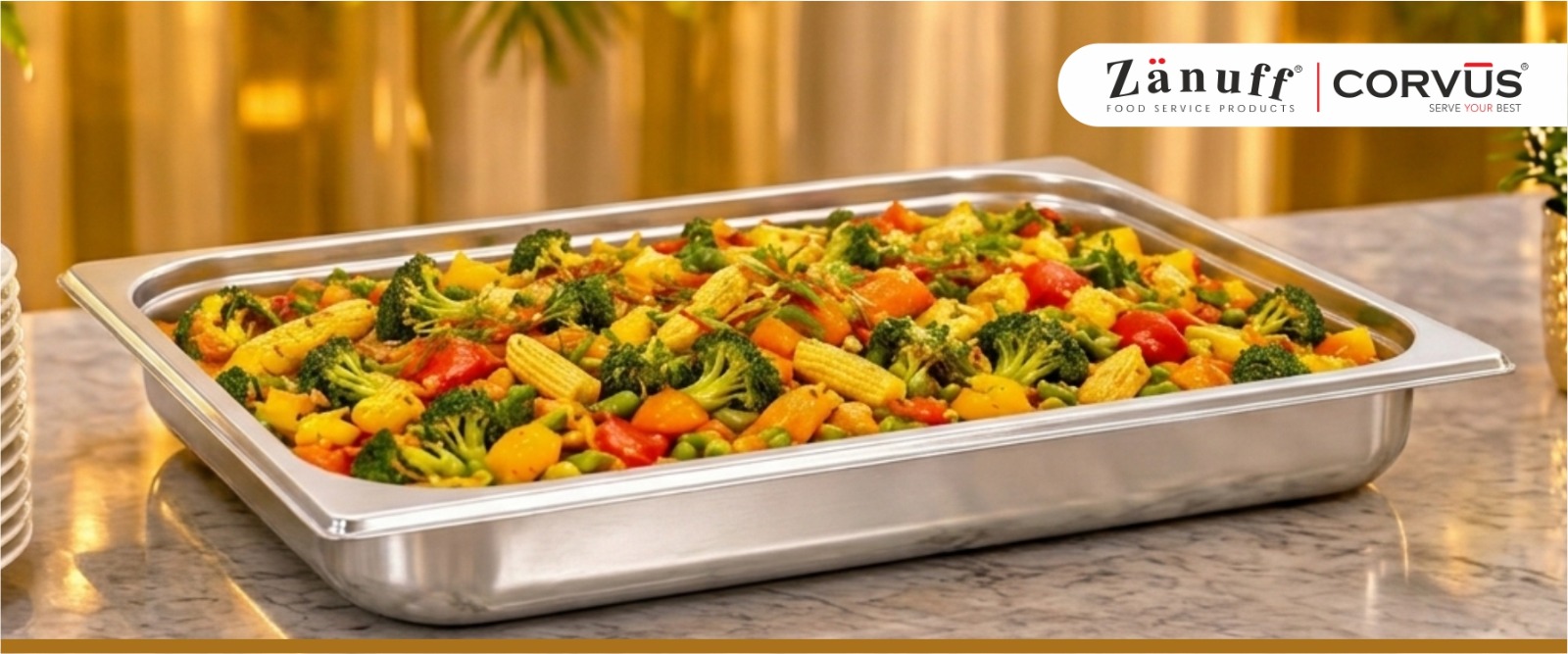
GN 2/1 Pans for Commercial Kitchens: Uses, Depths and Food-Grade Steel
Choosing the right food pans can help commercial kitchens manage bulk preparation more efficiently while maintaining hygiene and food safety. For hotels, restaurants, banquet halls and catering facilities, the right combination of pan capacity, depth, design and material quality can make a meaningful difference to daily operations.
GN 2/1 pans, measuring approximately 650 × 530 mm, provide a large working area for high-volume food preparation, cooking and handling. Available in different depths and solid or perforated designs, they accommodate a range of kitchen requirements. Equally important is the material: food-contact-grade stainless steel 304 offers corrosion resistance, durability and a surface suitable for routine cleaning and sanitisation when properly maintained.
Understanding these factors helps kitchen consultants and purchase managers select pans that meet operational demands while supporting hygienic food handling.
Common Uses of GN 2/1 Pans
GN 2/1 pans are particularly useful in kitchens that prepare and handle food in large batches.
Their large format can simplify bulk food handling, provided the pan is suited to the task and compatible with the equipment being used.
Don’t Miss: Mithai Display Pans: How to Choose the Right Pans for Your Business
GN 2/1 Pan Depths and Capacities
Pan depth determines how much food a container can accommodate and which tasks it suits. Options range from shallow pans for preparation to deeper pans for larger batches.
Pan depth | Approx. capacity | Typical application |
20 mm | 6 litres | Shallow preparation |
40 mm | 11 litres | Ingredient handling |
65 mm | 19 litres | General-purpose use |
100 mm | 29 litres | Larger cooking batches |
150 mm | 43 litres | Bulk food handling |
200 mm | 52 litres | High-volume preparation |
Capacities are approximate and may vary by product design and filling level.
Choose the depth according to batch size, food type and ease of handling. Deeper pans provide greater capacity, while shallower options can be more practical for specific preparation tasks. Always check compatibility with the intended oven, steamer or food holding equipment before purchasing.
Why Stainless Steel 304 Matters
In commercial kitchens, material quality is just as important as capacity. Stainless steel 304 is widely used in food-contact equipment because of its corrosion resistance, durability and suitability for contact with many food types.
For restaurants, hotels and banquet halls, choosing suitable food-contact-grade stainless steel helps support hygienic food handling. Its resistance to corrosion helps preserve the surface during regular use, cleaning and sanitisation, provided the pans are properly maintained.
However, the material alone cannot guarantee food safety. Appropriate cleaning procedures, thorough sanitisation, proper storage and routine inspection remain essential. Purchase managers should verify the steel grade, product specifications and applicable food-contact requirements before procurement.
Solid or Perforated GN 2/1 Pans?
The right design depends on the preparation method.
Kitchens handling varied menus may benefit from both designs to accommodate different cooking and preparation requirements.
What to Consider Before Buying
Before specifying GN 2/1 pans for a commercial kitchen, assess four essential factors:
A well-considered selection helps kitchens handle food more efficiently without compromising on hygiene or operational practicality.
GN 2/1 pans are a practical choice for high-volume food preparation and handling. Selecting the right depth, design and equipment-compatible dimensions helps meet operational needs, while food-contact-grade stainless steel 304 offers durability and corrosion resistance for demanding kitchen environments.
For restaurant consultants and purchase managers, evaluating these factors together supports informed procurement decisions and helps establish efficient, hygienic food handling practices.
Frequently Asked Questions
1. What are GN 2/1 pans used for in commercial kitchens?
GN 2/1 pans are used for bulk food preparation, cooking, ingredient handling, food holding, steaming and draining. Their large dimensions make them suitable for hotels, restaurants, banquet halls and institutional catering facilities.
2. What are the standard dimensions of a GN 2/1 pan?
A standard GN 2/1 pan measures approximately 650 × 530 mm. It offers a large working area for high-volume food preparation and handling.
3. What depths are available in GN 2/1 pans?
GN 2/1 pans are available in different depths, including 20 mm, 40 mm, 65 mm, 100 mm, 150 mm and 200 mm. The appropriate depth depends on the food quantity, preparation method and intended application.
4. Why is stainless steel 304 preferred for GN pans?
Stainless steel 304 offers good corrosion resistance, durability and suitability for food contact. It is also practical for commercial kitchens where pans undergo frequent cleaning and sanitisation.
5. What is the difference between solid and perforated GN 2/1 pans?
Solid GN 2/1 pans are suitable for holding sauces, gravies and foods that require liquid retention. Perforated pans allow liquids to drain and support steam circulation in compatible equipment, making them useful for steaming vegetables and draining produce.
6. How do I choose the right GN 2/1 pan depth?
Choose the depth based on batch size, food type and operational requirements. Shallow pans are useful for preparation and ingredient handling, while deeper pans are better suited to larger quantities and bulk food handling.
7. Are GN 2/1 pans compatible with commercial ovens and steamers?
GN 2/1 pans can be used with compatible commercial kitchen equipment, including ovens and steamers. However, always verify the equipment’s internal dimensions, rack configuration and compatibility with the selected pan depth before purchasing.
