
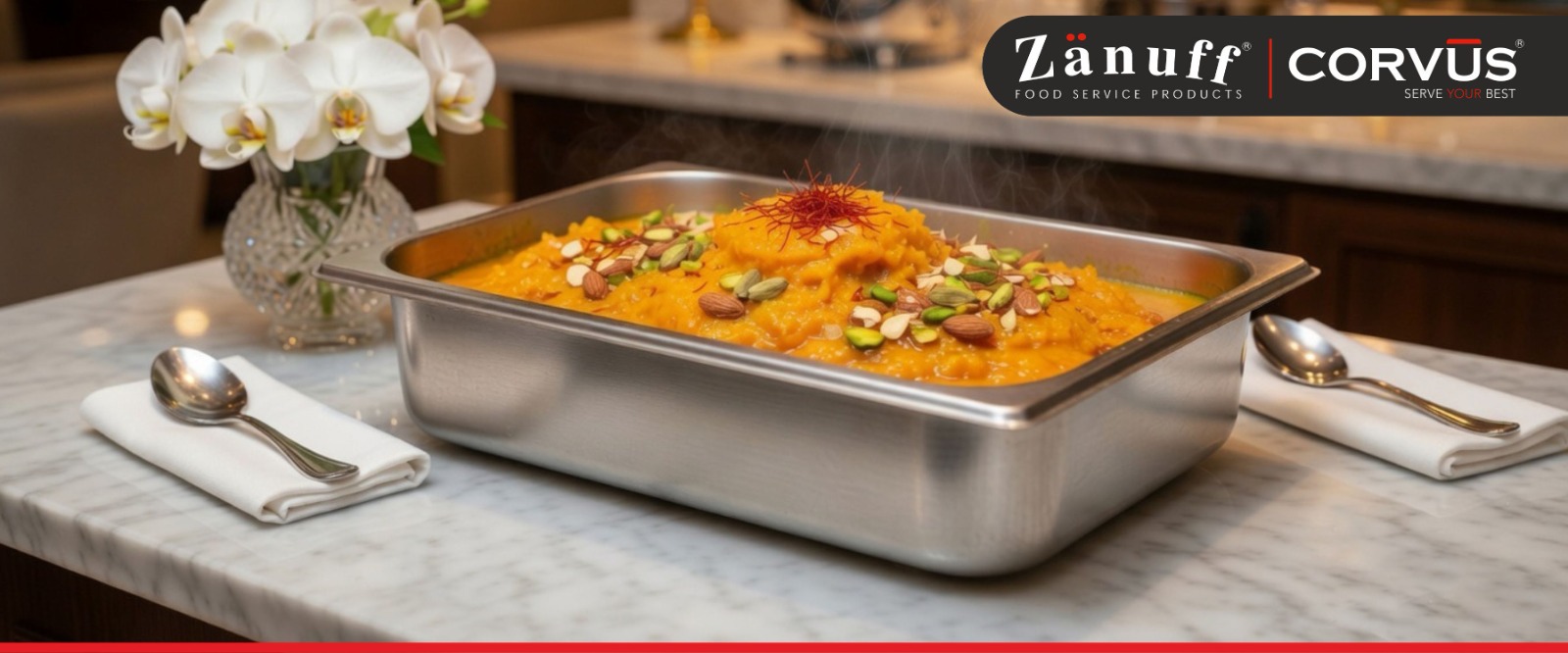
Mithai Display Pans: How to Choose the Right Pans for Your Business
A mithai display should do two things well: make the product look appealing and make it easy to manage hygienically.
For sweet shops, hotels, restaurants, bakeries, caterers and banquet operations, the display counter pan is part of the working equipment—not just a serving tray. The right pan makes products easier to display, serve, clean and maintain.
For purchase managers and consultants, the key is to look beyond price and consider material, construction, size and suitability for the product.
What Makes a Good Mithai Display Pan?
A commercial display pan should be designed for frequent handling, repeated washing and continuous display.
Look for:
For larger operations, using standardized pan sizes also makes replacement, restocking and counter planning easier.
Don’t Miss: Display Pans for Mithai Counters: Built for Presentation & Performance
Why SS304 Is a Smart Choice
For commercial food-contact applications, SS304 stainless steel is a preferred option because it offers a useful combination of hygiene, corrosion resistance, durability and easy maintenance.
A good-quality SS304 pan:
For a busy food-service operation, that makes SS304 a practical long-term investment—not simply a more expensive material.
Choose the Pan to Match the Mithai
One size or depth does not work equally well for every product.
Barfi & Kaju Katli
Choose a shallower pan that keeps the pieces visible and allows customers to appreciate their shape, layers and finish.
Laddoo & Boondi
A deeper pan provides better stability and makes serving easier.
Jalebi, Gulab Jamun & Rasgulla
Syrup-based sweets need sufficient depth and good liquid containment. Where required, draining or perforated inserts can also make handling easier.
The rule is simple: match the pan to the product, not the other way around.
Size Matters More Than You Think
The right dimensions depend on your counter layout, product size, quantity and serving method.
Common sizes include:
A depth of around 1.5 inches can work well for many dry sweets, while deeper pans are better suited to products requiring greater containment.
Before ordering, always check the actual counter dimensions rather than selecting a pan based only on a standard size.
Hygiene Starts With the Design
Cleaning should be easy—not a daily struggle.
Look for pans with:
Good construction can make routine cleaning faster and more consistent. It does not replace proper sanitation and food-handling procedures, but it makes them easier to follow.
A Better Display Creates a Better Customer Experience
Customers see the display before they taste the mithai.
A clean, well-organized counter communicates care, quality and professionalism. Consistent pan sizes also create visual order when several varieties are displayed together, allowing the colour, texture and shape of the sweets to stand out.
Good display equipment therefore serves both sides of the operation: it helps staff work efficiently and helps customers shop confidently.
The 6-Point Buying Check
Before placing an order, remember six words:
Grade. Gauge. Fit. Finish. Function. Supplier.
For hotels, banquet operations, large sweet shops and multi-location businesses, consistency is particularly important. A supplier should also be able to clearly specify the grade, thickness, dimensions, finish and customization options before you buy.
Don’t Buy on Price Alone
The cheapest pan is not necessarily the most economical one.
Poor construction, inconsistent sizing, difficult cleaning or early replacement can increase the real cost of ownership. A better purchasing decision considers durability, usability, maintenance and replacement frequency—not just the initial quotation.
For commercial food-service operations, a well-made display pan is a small investment that can contribute to better hygiene, smoother service and a more professional display.
FAQs
What is the standard size of a mithai display pan?
Common sizes include 9″ × 11″, 12″ × 14″ and 16″ × 12″. The best size depends on your counter and the products being displayed.
Is SS304 good for mithai display pans?
Yes. SS304 is widely preferred for commercial food-contact applications because of its durability, corrosion resistance and ease of cleaning.
How deep should a mithai display pan be?
Around 1.5 inches can work for many dry sweets. Deeper pans are better for laddoo and syrup-based mithai.
How should stainless-steel display pans be cleaned?
Use a mild food-safe detergent and warm water, rinse thoroughly and dry completely. Avoid steel wool and abrasive cleaners that can scratch the surface.
Can these pans be used in refrigerated displays?
Yes. Food-grade stainless-steel display pans can be used in ambient or refrigerated displays, depending on the requirements of the application.
How long will mithai stay fresh in a display pan?
There is no single answer. Freshness depends on the type of mithai, ingredients, temperature, humidity, storage and handling. The display pan supports hygienic presentation and handling but does not determine shelf life by itself.
Mithai Display Pan vs. GN Pan: What’s the difference?
A mithai display pan is designed primarily for retail presentation and product visibility. A GN (Gastronorm) pan uses standardized dimensions and is more commonly used for preparation, storage, transport and buffet service. The right choice depends on your operation and counter design.
