
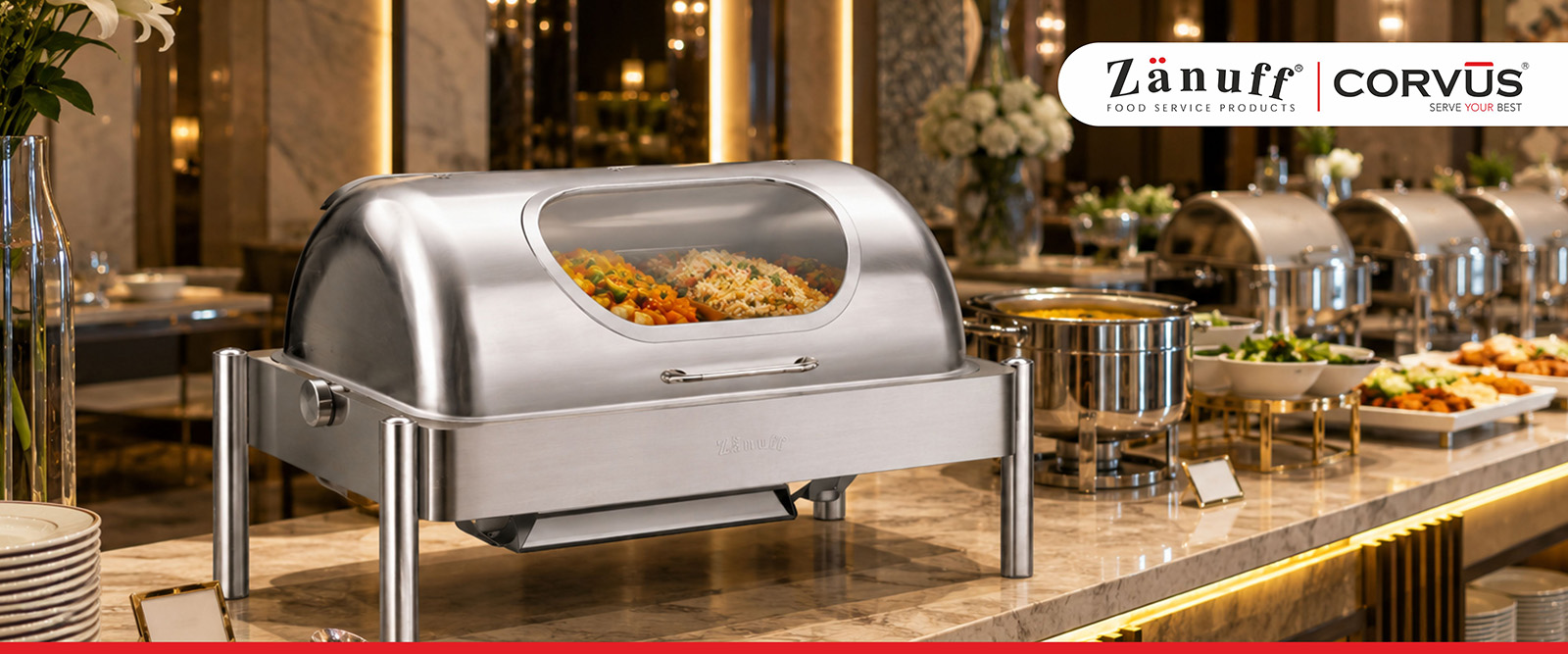
How Food Warmers Keep Buffet Food Safe, Fresh and Ready to Serve
In professional food service, serving great food is about more than preparation. It is also about maintaining the right temperature, texture and quality from the kitchen to the last guest.
Buffet service can often run for several hours, with dishes prepared well in advance and served continuously. Food warmers help bridge this gap by maintaining a consistent serving temperature while reducing the risk of food cooling down or losing its quality.
For restaurants, hotels, caterers and banquet kitchens, the right food warming equipment can make buffet service more efficient, consistent and enjoyable for guests
What Is a Food Warmer?
A food warmer is commercial kitchen equipment designed to keep cooked food hot and ready to serve for an extended period.
Depending on the operation, food warmers can include bain maries, chafing dishes, electric warmers, induction systems and heated food trolleys. Each type uses a different heating method, but the objective is the same: to maintain food at a suitable serving temperature without compromising its quality.
This is particularly important in Indian food service, where buffets often include a wide variety of dishes—from dal, gravies and curries to rice, biryani and vegetables.
Why Temperature Matters in Buffet Service
Temperature plays an important role in both food quality and food safety.
When cooked food is allowed to remain at unsuitable temperatures for extended periods, the risk of bacterial growth increases. Maintaining food at an appropriate hot-holding temperature helps reduce this risk while keeping dishes ready for service.
However, effective hot holding is not simply about turning on a warmer. Food should be cooked, handled, stored and reheated correctly, with temperatures checked regularly during service.
A good food warmer provides the consistent heat needed to support these practices without unnecessarily exposing food to excessive temperatures.
Don’t Miss: Commercial Non-Stick Cookware Procurement Guide
6 Types of Food Warmers Used in Professional Kitchens
Different food service operations require different warming solutions. The right choice depends on the type of food, quantity, service style and available space.
1. Bain Marie
A bain marie uses hot water to gently and evenly heat food containers. It is particularly suitable for dal, gravies, sauces and other dishes that can dry out or stick when exposed to direct heat.
2. Chafing Dish
Chafing dishes are widely used for buffets, banquets and catering because they are portable and easy to set up. They are suitable for a variety of dishes, including rice, biryani, curries and vegetables.
3. Electric Food Warmer
Electric warmers provide controlled and consistent heating, making them well suited to restaurants, hotels and indoor catering operations where a reliable power supply is available.
4. Induction Warmer
Induction systems offer precise heat control and a clean, modern setup. They are especially useful for professional buffet counters and live food stations where temperature control and presentation are important.
5. Heated Food Trolley
Heated trolleys are designed for larger food service operations. They allow multiple food containers to be transported and held at the desired temperature, making them useful in hotels, banquet facilities and large-scale catering operations.
6. Countertop Food Warmer
Compact countertop warmers are ideal when space is limited. They can be positioned directly on service counters and work well for restaurants, cafés and smaller catering setups.
Electric or Fuel-Based: Which Is Right for Your Operation?
The choice between electric and fuel-based warming depends largely on the environment in which the equipment will be used.
Electric warmers offer consistent heating and convenient temperature control. They are generally preferred for restaurants, hotels and indoor events with easy access to power.
Fuel-based warmers offer greater portability and can be useful for outdoor catering and events where access to electricity is limited.
When making a decision, consider the venue, power availability, number of dishes, expected service duration and how frequently the equipment will need to be moved.
How Food Warmers Help Preserve Taste and Texture
Good hot holding should maintain more than temperature. It should help preserve the character of the food itself.
Excessive or uneven heat can cause food to dry out, stick to the pan or continue cooking after it has reached its ideal consistency. Gentle, controlled heating helps maintain the texture and flavour achieved in the kitchen.
For example:
The warmer should therefore be selected according to the food being served, rather than simply the size of the buffet.
What to Look for When Buying a Food Warmer
Food warming equipment is a long-term investment for a professional kitchen. Beyond capacity and appearance, several practical factors should be considered.
304 Food-Grade Stainless Steel
For commercial food service, 304 food-grade stainless steel is an excellent choice for food-contact surfaces. It is durable, corrosion-resistant and easy to clean, making it well suited to the demanding environment of Indian commercial kitchens.
Capacity
Choose a capacity that matches your typical service volume. A large kitchen may require several medium-capacity units rather than one oversized warmer, allowing different dishes to be managed more efficiently.
Temperature Control
Reliable temperature control helps maintain consistent heating across different dishes and service periods. Adjustable settings can be particularly useful when working with foods that require different holding conditions.
Energy Efficiency
For equipment that operates for several hours each day, energy consumption is an important consideration. Efficient heating can help reduce operating costs without compromising performance.
Ease of Cleaning
Look for smooth surfaces, removable containers and easily accessible components. Equipment that is simple to clean encourages better daily hygiene and reduces maintenance time.
Lids and Covers
Well-designed covers help retain heat and moisture while protecting food during service. Depending on the setup, roll-top, glass or removable lids can also improve accessibility and presentation.
Portability
For caterers and event kitchens, equipment that is easy to transport, assemble and reposition can make a significant difference to the efficiency of service.
Cleaning and Maintaining Food Warmers
Regular cleaning and maintenance are essential for keeping food warmers hygienic and performing efficiently.
Food-contact surfaces should be cleaned thoroughly after every service. Water in bain maries should be changed regularly, while trays, containers and removable components should be cleaned according to the equipment manufacturer’s recommendations.
Heating areas should also be checked for food residue, grease and scale, as build-up can affect both performance and cleanliness.
Kitchen teams should also monitor food temperatures during service rather than relying solely on the warmer’s temperature setting. Consistent checks help ensure that food remains at the desired serving temperature throughout the buffet.
Choosing the Right Food Warmer
There is no single warming solution that works for every professional kitchen.
A small restaurant may benefit from a compact countertop or electric warmer, while a hotel or large catering operation may need multiple high-capacity units. Caterers working across different venues may place greater importance on portability, while restaurants may prioritise precise temperature control and energy efficiency.
Before investing, consider:
The right equipment should fit naturally into the kitchen’s workflow rather than simply adding another piece of equipment to the operation.
Final Thoughts
Food warmers play an important role in professional food service. They help maintain temperature, protect food quality and make it easier for kitchen teams to deliver a consistent dining experience throughout service.
For India’s restaurant, hotel and catering industry, where large-scale buffets and extended service periods are common, choosing the right warming equipment can have a meaningful impact on both food quality and operational efficiency.
From the material used in construction to temperature control, capacity and ease of cleaning, every detail matters. A well-designed food warmer is not simply a way to keep food hot—it is an important part of delivering food that remains consistent, appetising and ready to serve from the first guest to the last.
