
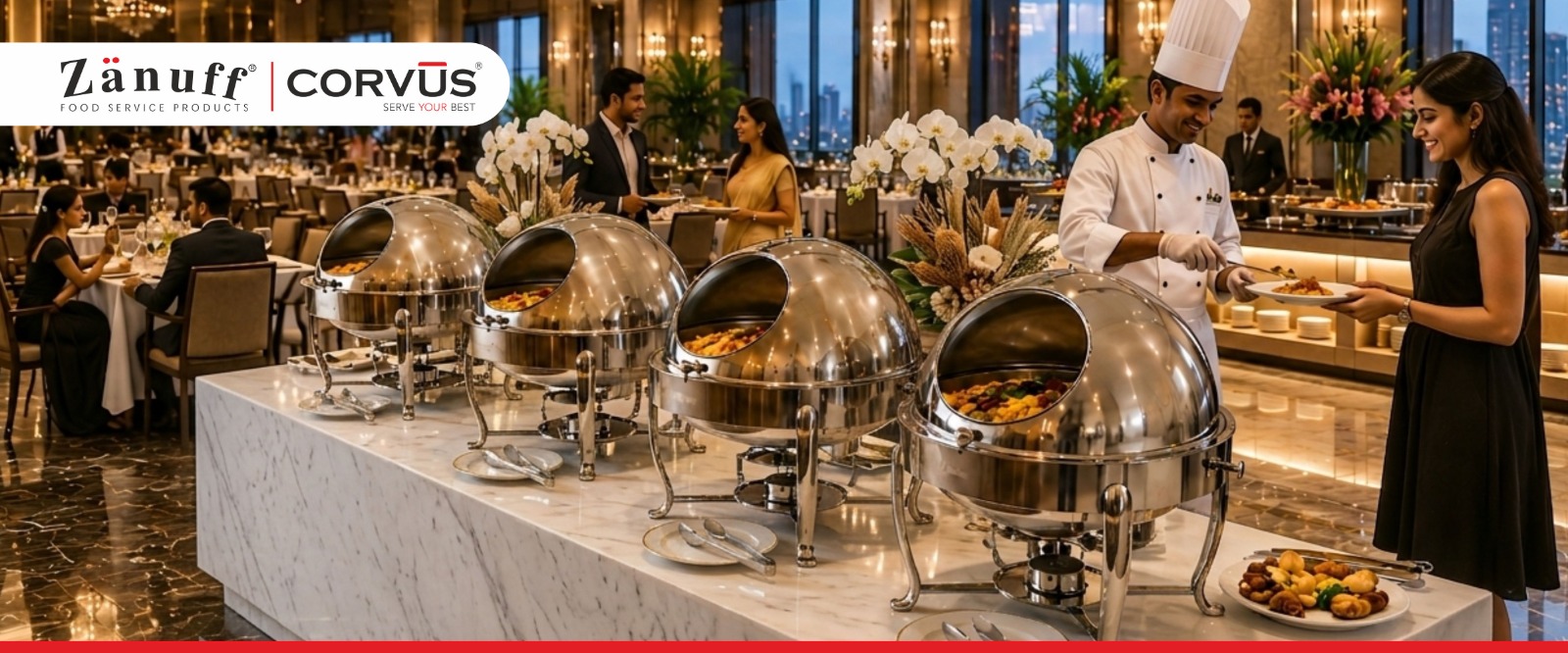
Chafing Dish Buffet Set Guide: What You Need for the Perfect Spread
Food is often the centerpiece of any successful event. Whether it is a lavish Indian wedding, a corporate banquet, a hotel buffet, or a catering function, guests expect every dish to be served hot, fresh, and appetizing. However, maintaining food temperature during long service hours can be challenging, especially when multiple dishes are displayed simultaneously.
This is where a chafing dish buffet set becomes an indispensable part of professional food service. Designed to keep food warm without direct cooking, chafing dishes help preserve taste, texture, and food safety while enhancing the overall presentation of the buffet.
Today, caterers, banquet halls, hotels, and event organizers across India rely on buffet solutions from manufacturers and suppliers to create organized and visually appealing buffet spreads.
What Is a Chafing Dish Buffet Set and How Does It Work?
A chafing dish buffet set is a food warming system used to maintain cooked food at a safe serving temperature during buffet service. Unlike cooking equipment, chafing dishes do not prepare food; instead, they gently keep food warm until it is served.
A chafing dish is a food warmer designed to keep prepared food at a safe serving temperature during buffet service. Unlike direct cooking equipment, it uses indirect heat to warm food gently without burning or drying it out.
The system operates using indirect heat, which prevents food from burning or drying out.
Understanding the Components
Types of Chafing Dishes Available in India
Round Chafing Dishes:
Round chafers feature a circular food pan and are designed for liquid and semi liquid dishes, the round shape that require even heat distribution and serving smoothly.
Best for:
Dal, Sambarand and kadhi
Curry dishes, Korma and gravies
Creamy Soups and strews
Rectangular Chafing Dishes:
A rectangular chafer is the most widely used buffet warmer in the hospitality industry.The rectangular shape allows efficient use of buffet table space while accommodating standard full-size and half-size food pans. This versatility makes rectangular chafers suitable for a wide variety of Indian and international dishes.
Best for:
Biryani, Pulao and Paneer preparations
Mixed vegetable dishes
Noodles, fried rice and pasta
Dry sabzi, Kebabs and appetisers
Roll Top Chafing Dishes:
A Roll-top chafers are buffet service equipment featuring a hinged lid that rolls backward for easy food access. They offer a professional appearance, better heat retention, and reduced lid handling, making service more convenient and hygienic. These chafers are commonly used in luxury hotels, corporate events, banquet halls, and wedding receptions where efficient service and elegant presentation are important.
Best for:
Self-service buffets
Hotel breakfast stations
Premium banquet spreads
Lift – off Lid Chafers:
Lift-off Lid Chafers are buffet service equipment with a removable lid that can be completely lifted off during service. Their simple design makes them easy to use, clean, and maintain. These chafers are suitable for a variety of catering and buffet settings where practicality and cost-effectiveness are important.
Best for:
Breakfast items
Starters and appetizers
Main course dishes
Rice and pasta preparations
Curries and side dishes
Their versatile design makes them suitable for serving almost any type of food in buffet and catering operations.
Fuel Options Explained: Gel, Liquid Fuel, and Electric
1. Gel Fuel: A gel fuel is a thickened alcohol-based fuel packed in small cans. The can is opened and lit directly beneath the chafer.
Advantage:
Best Indian Use Cases
2. Liquid Sterno-Type Fuel (Chafing Fuel Canister)
A refillable or disposable metal canister containing liquid fuel, typically methanol, ethanol, or diethylene glycol formulations.
Advantages:
Best Indian Use Cases
3. Electric Induction Chafers:
An electrically powered electric chafer that uses induction heating or concealed heating elements instead of flame.
Advantages
Best Indian Use Cases
Chafing Dish Materials and Finish Options
Capacity Mapping (Indian Event Logic)
| Guest Count | Event Type | Recommended Capacity | Pan Type Logic |
| 10–25 guests | Small puja / house gathering | 3L–5L | Half-size chafer |
| 25–60 guests | Kitty party / birthday | 5L–7L | Half-size GN setup |
| 60–120 guests | Mehendi / engagement | 7L–10L | Mix of half + full-size pans |
| 120–200 guests | Shaadi reception buffet | 9L–14L | Full-size chafer + GN system |
| 200+ guests | Large weddings / corporate | 12L–14L+ | Full-size multi-line buffet |
Full-Size vs Half-Size Logic (GN Standard)
The Gastronorm GN standard allows modular food pan fitting inside chafer bodies.
In practice:
Setting Up the Perfect Buffet Spread with Chafing Dishes.
A well-organized buffet improves service speed and guest experience, especially in Indian multi-dish menus (dal, sabzi, rice, curries, desserts).
Step-by-Step Buffet Line Setup
Food Safety and Temperature Rules for Chafing Dish Use
Maintaining safe serving temperatures is essential for preventing bacterial growth.
According to guidance from FSSAI, hot foods should generally be maintained at temperatures above 60°C during service.
Check Temperature Frequently
Food Safety Checklist
Cleaning, Maintenance, and Storage of Chafing Dish Sets Proper cleaning and maintenance are essential for preserving the appearance, hygiene, and lifespan of chafing dish buffet sets. Regular care not only keeps the equipment looking professional but also ensures safe and efficient performance during every event
Step 1: Cool Before Cleaning: Allow all components to cool completely after use.
Step 2: Disassemble the Unit
Remove:
Step 3: Wash with Neutral Detergent: Use mild cleaning solutions suitable for food-contact surfaces.
Avoid:
Step 4: Rinse Thoroughly: Ensure all detergent residues are removed.
Step 5: Dry Completely: Thorough drying prevents water spots, staining, and corrosion.
Step 6: Store Properly: Store equipment in a dry, dust-free environment.
Storage Best Practices
Proper maintenance and storage practices help preserve the appearance, functionality, and durability of chafing dish sets, ensuring reliable performance and an extended service life.
A chafing dish buffet set is essential for keeping food warm, safe, and visually appealing during buffet service. By choosing the right size, design, material, and heating method, you can ensure efficient food service and an enhanced guest experience. With proper setup, temperature control, and regular maintenance, chafing dishes provide reliable performance, long-lasting durability, and a professional presentation for weddings, banquets, hotels, and catering events.
